

The real costs of starting a bookkeeping business: Part 1
Here's what you'll actually pay for when you're new. I'll walk through the real costs of starting a bookkeeping business, focusing on the non-negotiables. You'll finish with a clearer budget and fewer surprises ... The real costs of starting, A bookkeeping business, Invest in knowledge You can spend weeks comparing accounting software, but the real costs of starting a bookkeeping business usually begin with compliance and basic protection. If you want to trade confidently (and sleep at night), you need to understand what's legally required, what's sensible, and what can wait until you've signed your first few clients. Start with Anti-Money Laundering (AML), because | ||||||||||||||||||||||||||||||||||||||||||||||||||||||||||||||||||||||||||||||||||||||


Would you like to know more? |
If anything I've written in this blog post resonates with you and you'd like to discover more about the real costs of starting a bookkeeping business, it may be a great idea to give me a call on 01604 420057 and let's see how I can help you. |
Share the blog love ... | |||||||||||||||||||||||
#bookkeepingbusiness #UKbookkeepers #AMLcompliance #ICRegistration #smallbusinessUK |


About Alison Mead ... | ||
|
More blog posts for you to enjoy ... | ||
 | Why should you use a Bookkeeper? Keeping track of your accounts is a science as well as an art form. Yes, of course you can do it yourself, but wouldn't a bookkeeper make your life a whole lot easier? Having a clear picture of your finances at any given time... | |
 | Bookkeeping Buddy: Why DIY Bookkeeping Doesn't Mean Doing It Alone Many small business owners attempt DIY bookkeeping to save costs and maintain control. Yet, this path can be daunting. Learn how you can manage your finances more effectively with my Bookkeeping Buddy subscription, ensuring y... | |
 | Building A Bookkeeping Business: Increasing Your Prices You may have already done the difficult part of starting your own bookkeeping business; you've found clients, you've decided on your pricing, and now you're getting on with the day-to-day of looking after the clients you've .... | |
 | Some great reviews for my Bookkeeping Buddy subscription Do It Yourself bookkeeping often feels like a chore when you're managing your own business accounts or even just starting off as a bookkeeper. This is why I created my Bookkeeping Buddy subscription and I'm getting some great... | |
 | Sage 50 Accounts update brings making tax digital changes A new Sage 50 Accounts update is coming, with version 34.1 introducing changes to align the software with current UK and Irish requirements. For businesses, accountants and bookkeepers, one of the update's most important area... | |
 | Building Your Bookkeeping Business in 2026 The usual question I see asked in bookkeeping groups and forums is, where can I find customers, or how can I get experience now that I have passed my bookkeeping exams and started my bookkeeping business ...... | |
 | Making Tax Digital registration: Why you should act before HMRC does If you are required to use Making Tax Digital for Income Tax but haven't yet registered, my advice is simple: don't wait for HMRC to do it for you. Taking control of your Making Tax Digital registration now gives you the oppo... | |
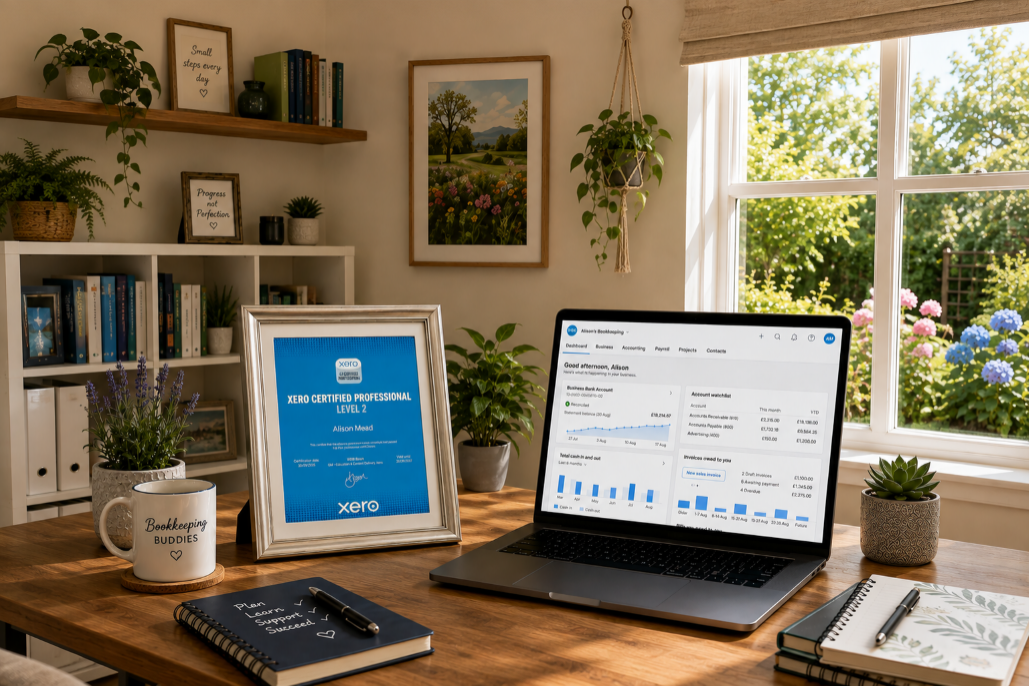 | I've passed my Xero level 2 certification for another year While I'm certainly going to allow myself a little celebration, maintaining Xero certification for bookkeepers is about much more than having another certificate to display. For me, it's about demonstrating that the knowledge... | |
Other bloggers you may like ... | ||
 | What happens if you don't check in with YourPING? Posted by Steffi Lewis on https://www.yourping.uk Life gets busy, and even simple things can slip our minds. You might be enjoying a long conversation with a friend, working in the garden, watching a ... | |
 | Are you an overseas visitor looking to stay in Milton Keynes? Posted by Emily Freeman on https://blog.shortstay-mk.co.uk Overseas visitors seeking a base in Milton Keynes will find we offer an exceptional range of serviced accommodation tailored to their needs. Discover ... | |
 | Turning setbacks into opportunities: How difficult times can lead to new beginnings Posted by Dave Cordle on https://blog.davecordle.co.uk Life doesn't always go according to plan, does it? Sometimes events happen that completely knock us off course, whether that's redundancy, a business ... | |
 | Inheritance Tax on pensions: What the 2027 rules mean for your family Posted by Roger Eddowes on https://blog.essendonaccounts.co.uk The rules surrounding Inheritance Tax on pensions are changing in 2027, and anyone hoping to leave their pension savings to loved ones should be aware ... | |